By Brandon Ashworth
Zillow House Value Estimator: What Buyers Need to Know Before Trusting the Zestimate
Reading time: 12 minutes
You’ve found a home you love. You punch the address into Zillow, and a number appears—bold, confident, seemingly authoritative. The Zestimate. It feels like truth. But is it?
Here’s the straight talk: The Zillow House Value Estimator is a powerful starting point, but treating it as gospel can cost you thousands—or even tens of thousands—of dollars. In 2026’s dynamic housing market, where inventory fluctuations, interest rate shifts, and neighborhood micro-trends change month to month, understanding exactly what the Zestimate is—and isn’t—might be the most important homework you do before making an offer.
This guide strips away the mystery. Whether you’re a first-time buyer nervously scrolling listings at midnight or a seasoned investor stress-testing acquisition targets, you’ll walk away knowing how to use the Zestimate strategically rather than blindly.
Table of Contents
- What Is the Zillow Zestimate, Really?
- How the Algorithm Actually Works
- How Accurate Is It in 2026?
- Zestimate Accuracy by Property Type
- Zestimate vs. Other Estimators: A Comparison
- Real-World Scenarios: When It Helps and When It Hurts
- 3 Common Buyer Mistakes and How to Avoid Them
- How to Use the Zestimate Smartly
- Frequently Asked Questions
- Your Buyer’s Roadmap: From Estimate to Confident Offer
What Is the Zillow Zestimate, Really?
The Zestimate is Zillow’s proprietary automated valuation model (AVM) that generates an estimated market value for nearly every residential property in the United States. Launched in 2006, it has become the most recognized home value tool in the country, with Zillow reporting over 220 million properties covered as of early 2026.
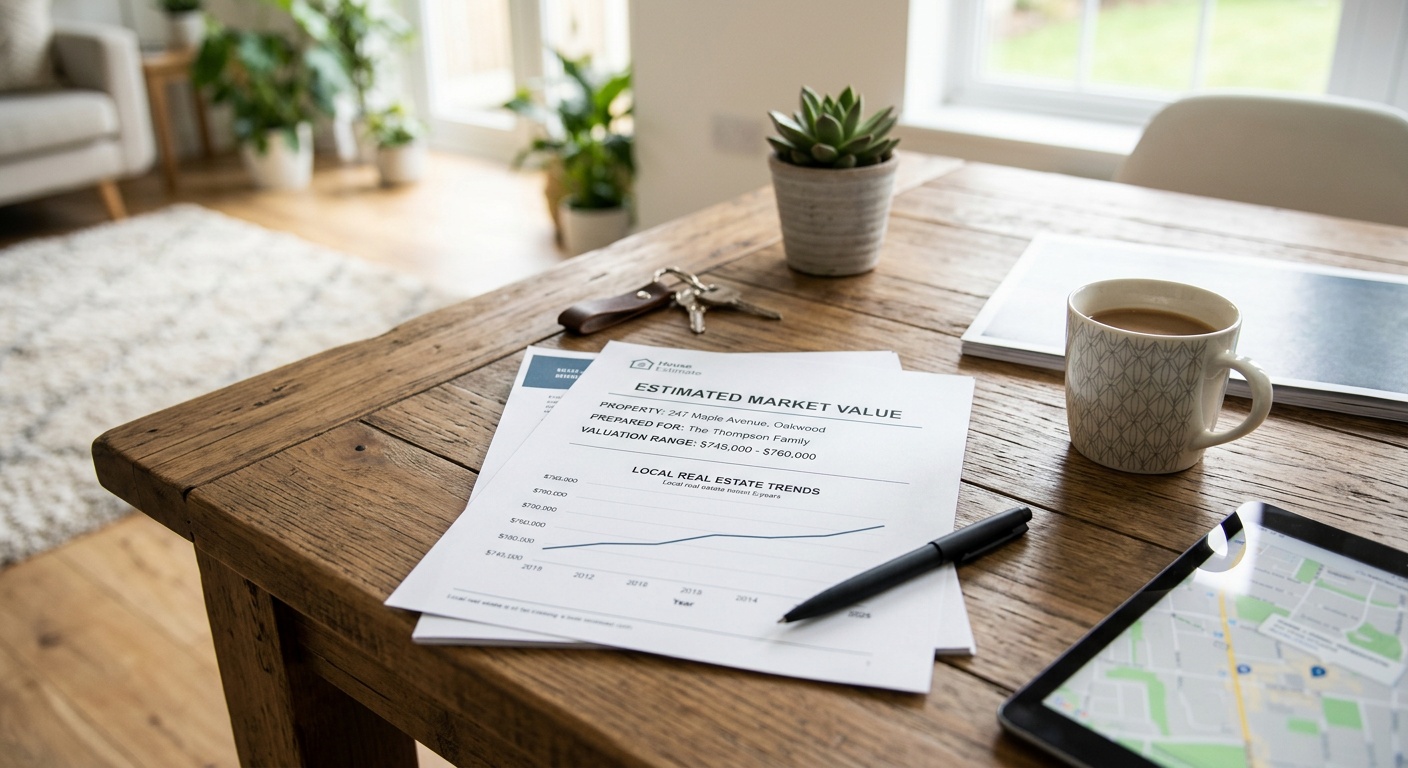
But here’s what the landing page doesn’t highlight: Zillow itself describes the Zestimate as “a starting point” in determining a home’s value, not a formal appraisal. This distinction matters enormously. A formal appraisal involves a licensed professional physically inspecting the property, reviewing comparable sales, and applying localized market judgment. A Zestimate does none of those things.
Think of it like this: the Zestimate is the nutrition label on a food package—useful, standardized, and worth reading—but it’s not the same as a dietitian evaluating your specific health needs.
What Data Does Zillow Collect?
Zillow’s algorithm pulls from a wide variety of public and proprietary sources, including:
- Public records: Tax assessments, property deeds, and recorded sales
- MLS data: Active listings, pending sales, and recently sold properties
- User-submitted information: Homeowners can update square footage, bedroom count, renovations, and more
- Geographic and neighborhood data: School district ratings, proximity to amenities, walkability scores
- Market trend data: Local price appreciation rates, days on market averages
The critical insight here is that the model is only as good as its inputs. In areas with sparse MLS data, limited public records, or rapidly changing local conditions, the algorithm can struggle significantly.
How the Algorithm Actually Works
Zillow uses a neural network-based machine learning model that processes millions of data points simultaneously. In 2019, Zillow upgraded its core algorithm after hosting an open data science competition (the “Zillow Prize”), incorporating ensemble learning techniques that blended predictions from multiple sub-models.
By 2026, Zillow has continued refining the model to incorporate real-time MLS feeds in most major metro areas, meaning values can update multiple times per week rather than once monthly as was the case in earlier iterations.
The Comparable Sales Engine
At its core, the Zestimate is a sophisticated comparable sales analysis. The algorithm identifies recently sold properties that share characteristics with the subject property—size, age, bedroom/bathroom count, lot size—and weights them by similarity and recency. It then applies adjustments for features the subject property has that the comps don’t (or vice versa).
Where human appraisers excel is in qualitative judgment: recognizing that a home on a busy commercial road is worth significantly less than an identical home two streets over on a quiet cul-de-sac, or that a kitchen remodel with premium finishes adds more value than budget materials. The algorithm approximates these factors but cannot fully replicate human contextual reasoning.
Pro Tip: If you’re a seller or buyer with a recently renovated property, submit your updates directly through Zillow’s owner portal. User-submitted data does influence the Zestimate calculation, and accurate square footage or added features can shift the estimate meaningfully.
How Accurate Is It in 2026?
Zillow publishes its own accuracy metrics, broken down by region and property type. As of Q1 2026, Zillow reports a national median error rate of approximately 2.4% for on-market homes and 6.9% for off-market homes. These figures represent the median percentage difference between the Zestimate and the eventual sale price.
That sounds reassuring—until you run the math on a real transaction. On a $500,000 home, a 6.9% error means the Zestimate could be off by $34,500 in either direction. For most buyers, that’s not a rounding error—it’s a life-altering financial miscalculation.
Furthermore, these are median errors. Half of properties fall outside that range. In rural areas, unique properties, and markets with low transaction volume, error rates routinely exceed 10–15%.
The 2026 housing market has added new complexity. Following the Federal Reserve’s gradual rate adjustments throughout 2025, regional markets have diverged sharply. Sun Belt cities like Austin and Phoenix have seen correction-era comps skewing Zestimates lower than actual current values, while tight-inventory Northeast markets show estimates lagging behind rapid appreciation. Market timing and regional volatility are the Zestimate’s Achilles heel.
Zestimate Accuracy by Property Type and Market Condition
The chart below illustrates approximate Zestimate accuracy (measured as the percentage of estimates within 5% of sale price) across different property and market categories, based on aggregated 2025–2026 transaction data.
Zestimate Accuracy: % of Estimates Within 5% of Sale Price
Source: Aggregated AVM performance data, 2025–2026 transaction records
Zestimate vs. Other Home Value Estimators: A Comparison
Zillow isn’t the only player in the AVM space. Here’s how it stacks up against major competitors in 2026:
| Tool | Median Error (On-Market) | Update Frequency | Best Use Case | Coverage |
|---|---|---|---|---|
| Zillow Zestimate | ~2.4% | Multiple times/week | Initial research, trend tracking | 220M+ properties |
| Redfin Estimate | ~2.1% | Daily (listed homes) | Active market comps | ~100M properties |
| Realtor.com Value | ~3.0% | Weekly | Cross-referencing estimates | ~160M properties |
| Chase MyHome | ~2.8% | Monthly | Mortgage planning context | ~150M properties |
| Licensed Appraisal | <1% (typical) | One-time (on request) | Definitive pre-offer valuation | Any property |
Note: Error rates reflect median figures for on-market properties and may vary significantly by region and property type.
Real-World Scenarios: When the Zestimate Helps and When It Hurts
Scenario 1: The Overconfident First-Time Buyer in Denver
Consider Maya, a 31-year-old software engineer who relocated to Denver in early 2026. She identified a townhome in the Wash Park neighborhood listed at $625,000. The Zestimate showed $598,000—$27,000 below asking. She interpreted this as evidence the seller was overpricing, and submitted an offer at $605,000 after minimal additional research.
The offer was rejected. Two competing buyers had commissioned broker price opinions and recognized that the property had undergone a full kitchen and primary bathroom renovation six months prior—updates that hadn’t been fully captured in the Zestimate. The home ultimately sold for $638,000. Maya’s over-reliance on the Zestimate caused her to underbid and lose the home entirely.
The lesson: The Zestimate is backward-looking. It takes time for recent improvements to register in the algorithm, especially if they’re not submitted by the owner or reflected in recent comps.
Scenario 2: The Savvy Investor in Cleveland
Marcus, a real estate investor based in Cleveland, uses the Zestimate differently. He runs comparative analyses across 50–100 properties at a time to identify statistical outliers—homes where the listing price is significantly below the Zestimate without obvious explanation. He calls these “attention flags” that warrant deeper investigation, not automatic buying signals.
In late 2025, he spotted a duplex in Ohio City listed at $310,000 with a Zestimate of $347,000. Rather than assuming it was an instant deal, he investigated further: got a walkthrough, ordered an inspection, and pulled his own comps. The $37,000 gap was partially explained by deferred maintenance, but a $15,000–18,000 legitimate undervaluation remained. He submitted a competitive offer at $318,000 and closed successfully.
The lesson: The Zestimate is a screening tool, not a decision tool. Use it to surface opportunities worth investigating, then validate with rigorous ground-level research.
3 Common Buyer Mistakes and How to Avoid Them
Mistake 1: Using the Zestimate as Your Ceiling or Floor for Offers
Many buyers anchor their offer strategy directly to the Zestimate, either refusing to bid above it or assuming the gap between listing price and Zestimate is pure negotiating room. Both approaches are flawed.
The fix: Use the Zestimate as one of at least three data points. Cross-reference it with Redfin’s estimate, ask your buyer’s agent for a formal Comparative Market Analysis (CMA), and if the property is unique or the stakes are high, commission a pre-offer appraisal ($400–$600 is money well spent on a $500,000+ transaction).
Mistake 2: Ignoring the Zestimate’s Confidence Range
Zillow displays a value range alongside each Zestimate—for example, “$480,000–$540,000” around a $510,000 estimate. Many buyers focus only on the midpoint figure and ignore the spread. A wide range (over $50,000 on a $400,000 home) is a direct signal that the algorithm lacks confidence in its own estimate.
The fix: Always check the displayed range. A narrow range suggests high data quality and reliability. A wide range means you need more human expertise in the loop before making financial decisions.
Mistake 3: Forgetting That Zestimates React to Listings—Not Just Sales
Here’s a counterintuitive fact: when a home is listed on Zillow at a specific price, the Zestimate often shifts toward that listing price. This is because listing data feeds into the algorithm. If a seller lists their home above market value, the Zestimate can temporarily inflate to reflect that listing—creating a false impression of value.
The fix: Always check the Zestimate history chart on the property page. Look for sudden jumps that coincide with the listing date. If the estimate spiked significantly when the home was listed, treat the current figure with extra skepticism and focus more heavily on sold comp data.
How to Use the Zestimate Smartly: A Practical Framework
The goal isn’t to dismiss the Zestimate—it’s to use it as part of a layered valuation strategy. Here’s a practical framework:
- Step 1 – Baseline check: Pull the Zestimate as your first touchpoint when evaluating a property. Note the estimate, the range, and the Zestimate history.
- Step 2 – Cross-reference: Check Redfin’s estimate and Realtor.com’s value for the same address. If all three are within 3–4% of each other, you have reasonable convergence. If they diverge by 10%+, treat all figures as unreliable and dig deeper.
- Step 3 – Pull sold comps manually: Use Zillow’s own “recently sold” filter within a half-mile radius over the past 6 months. Look for homes that genuinely resemble your target (not just the same zip code).
- Step 4 – Agent CMA: Request a formal Comparative Market Analysis from a licensed buyer’s agent. This is free with representation and typically more nuanced than any AVM.
- Step 5 – Verify property details: Check whether the Zestimate reflects accurate square footage, bedroom count, and any documented renovations. Discrepancies here are common and consequential.
- Step 6 – Contextualize market conditions: Consider whether the local market is appreciating, depreciating, or flat. In rapidly shifting markets, even weekly-updated AVMs lag actual conditions.
Quick Scenario: You’re considering a 3-bed, 2-bath ranch in a suburban Columbus neighborhood. The listing is $385,000, Zestimate shows $371,000, Redfin shows $379,000. The spread is modest—this is a situation where your agent’s CMA and 2–3 solid comps can give you real conviction on offer pricing. Contrast that with a lakefront property in rural Wisconsin where estimates diverge by $90,000—there, you’re flying blind without professional appraisal support.
Frequently Asked Questions
Can I trust the Zestimate to determine how much to offer on a house?
Not on its own. The Zestimate is a useful reference point but carries a median error rate of roughly 6.9% for off-market homes and 2.4% for on-market homes in 2026. On a $450,000 home, that potential error range is significant enough to influence both your offer strategy and your financing. Always supplement the Zestimate with a licensed agent’s CMA, cross-referenced estimates from competing platforms, and—for high-stakes purchases—a pre-offer appraisal. The Zestimate is a conversation starter, not a closing argument.
Why does my Zestimate seem lower than what similar homes are selling for in my neighborhood?
Several factors can cause this gap. The most common include: outdated property data (especially if renovations haven’t been submitted), a lag in processing recent comparable sales, or a thin data environment in your specific area. If you own the property, log in to Zillow’s owner portal and update your home facts—accurate square footage, bedroom count, and renovation details can meaningfully improve the estimate. Additionally, in rapidly appreciating markets, Zestimates often trail actual values by 30–90 days simply due to data processing timelines.
Is the Zestimate the same as a home appraisal?
Absolutely not, and this distinction is crucial. A Zestimate is an automated algorithm output with no physical inspection, no human professional judgment, and no legal standing. A licensed home appraisal is conducted by a certified professional who physically visits the property, evaluates its condition, reviews hyper-local comps, and produces a report that lenders accept as the official basis for loan decisions. Appraisals typically cost $400–$700 and take 1–2 weeks. For any transaction where significant money is at stake—which is every home purchase—treat the appraisal as the authoritative figure and the Zestimate as the preliminary estimate.
Your Buyer’s Roadmap: From Estimate to Confident Offer
Here’s the truth about the Zestimate in 2026: it’s better than it’s ever been, and it’s still not good enough to rely on alone. The algorithm has improved dramatically, update frequencies have accelerated, and data coverage has expanded. But the fundamental limitations—lagging data, inability to assess condition, struggles with unique properties—remain structural, not temporary.
As a buyer, your competitive advantage isn’t finding a tool that replaces judgment. It’s building a process that layers multiple inputs intelligently.
Your immediate action checklist:
- ✅ Check the Zestimate and its confidence range for every property you seriously evaluate
- ✅ Cross-reference with at least one competing AVM (Redfin is recommended for most markets)
- ✅ Request a formal CMA from your buyer’s agent before submitting any offer
- ✅ Review the Zestimate history chart to detect listing-price inflation artifacts
- ✅ Verify the underlying property data matches reality (square footage, beds, baths, updates)
- ✅ For properties over $600,000 or in low-transaction markets, commission a pre-offer appraisal
- ✅ Contextualize all estimates against your local market’s current trend direction
The broader shift happening in real estate right now is that information parity between buyers and sellers is increasing. AVMs, public data access, and digital market analytics have democratized market intelligence in ways unimaginable twenty years ago. The buyers who win aren’t those with the most data—they’re those who interpret data most skillfully.
Here’s your challenge: The next time you look at a Zestimate, don’t ask “is this the right price?” Ask instead, “what is this number telling me, and what is it failing to tell me?” That reframe alone will make you a sharper, more confident buyer in any market condition.
The Zestimate is a starting line, not a finish line. Know the difference—and run the full race.